
Jacobs Creek Dining Hall Renovation
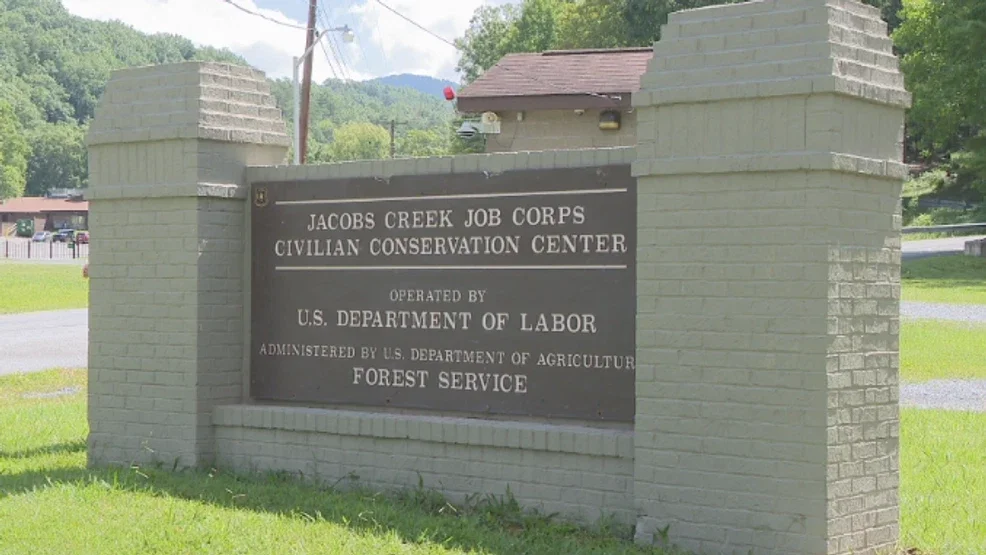
AGENCY: U.S. Department of Agriculture Forest Services, Job Corps
LOCATION: Bristol, Tennessee
SIZE: $738,323
PRIME: AACON General Contractors overseeing 4 Key Subcontractors
AWARD DATE: June 2020
COMPLETION: February 2021
In June of 2020, AACON was awarded a Design/Build Contract with the United States Department of Agriculture Forest Services/Job Corps. The project consisted of providing design drawings and specifications, as well as construction services for the Renovation of the Jacobs Creek Civilian Conservation Centers Dining Facility located in Bristol, TN.
Established in 1964, Job Corps is the largest nationwide residential career training program in the country and has trained and educated over two million individuals. The program helps eligible young people ages 16 through 24 complete their high school education, trains them for meaningful careers, and assists them with obtaining employment.
Overview. The Dining Hall Renovation projects design scope of work consisted of providing Final Issued for Construction Drawings and Specifications for Architectural, Mechanical, Electrical, and Plumbing disciplines. The projects construction scopes of work included investigation/repair of existing sanitary lines, removal of existing flooring system, installation of new flooring system, reconfiguration of domestic water supply and electrical systems, and replacement of kitchen and associated mechanical equipment.
Upon receipt of the Notice of Award, AACON began preparation of the required design drawings and specifications, procuring material and equipment information, and coordinating logistics with its subcontractor’s, suppliers, and vendors. Upon completion of the ninety-five percent set of design drawings, AACON mobilized personnel and equipment to the project site and began removal of the existing kitchen equipment and investigative measures to determine if the existing sanitary sewer system was functional and in satisfactory operational order. This was achieved by scoping the existing lines from each floor drain and providing the USDA with the findings via video recording. After completion of the investigation, AACON proceeded with demolition of the existing quarry tile flooring and vinyl composition tile flooring systems.
Challenges Encountered and Resolutions Employed. AACON was presented its first challenge while performing demolition operations on the existing quarry tile flooring system. The original set of design drawings depicted an inch and one-half setting bed under the quarry tile, but actually varied from one-half inch to three and one-half inches. This resulted in the requirement to install a floor leveling system to ensure that the new epoxy flooring system was consistent in thickness and was level and sloped to the floor drains. The existing slab-on-grade required saw cutting in order to run new domestic water lines, sanitary drain lines, and electrical raceway to accommodate the relocation of a salad bar and drink station.
After completion of the installation of the new epoxy flooring system, AACON and it’s subcontractors focused on upgrading the existing electrical system infrastructure and upgrading architectural features throughout the Dining Hall. Existing ceramic tile in the dish washing area was removed and CMU partitions ground to a flush/even surface in preparation for new stainless steel wall panels installed. Existing acoustical ceiling tiles and grid were removed to accommodate the installation of the new kitchen hoods and minor prep work was performed on existing partition assemblies.
A second challenge AACON faced was the unforeseen condition of the existing electrical infrastructure. Existing electrical wiring had to be replaced to accommodate upgraded kitchen equipment and unidentified circuits replaced to conform to current code requirements. In addition, the existing panel board required new breakers and the addition of new circuits to support facility operations. A new makeup air unit was installed on the roof to supply airflow to the kitchen while new exhaust fans were installed to evacuate interior air during facility operations. The installation of the epoxy flooring system through out the facility followed the electrical and mechanical upgrades and the new kitchen hoods were installed along with design specific stainless steel ductwork and an integrated Ansul Fire Suppression System.
Touch-up of interior partition assemblies, modification of the existing acoustical ceiling system, installation of the kitchen equipment, and performance verification testing were the last items to be performed prior to a PreFinal Walk-through Inspection with the USDA. All equipment was verified operational and the HVAC system tested and balanced prior to final turnover to the USDA.
