
Repair Two CRAC Units, Room 254, Building 457
AGENCY: U.S. Air Force
LOCATION: Offutt, Nebraska
SIZE: $110,721
PRIME: AACON General Contractors
AWARD DATE: August 2024
COMPLETED: March 2025
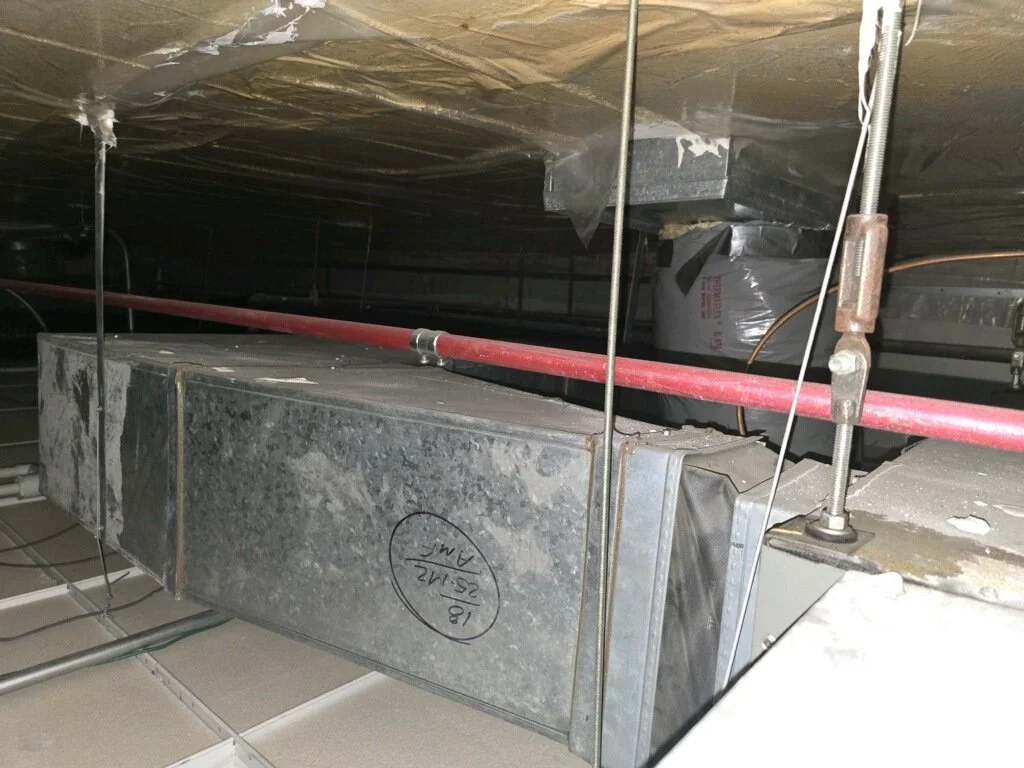
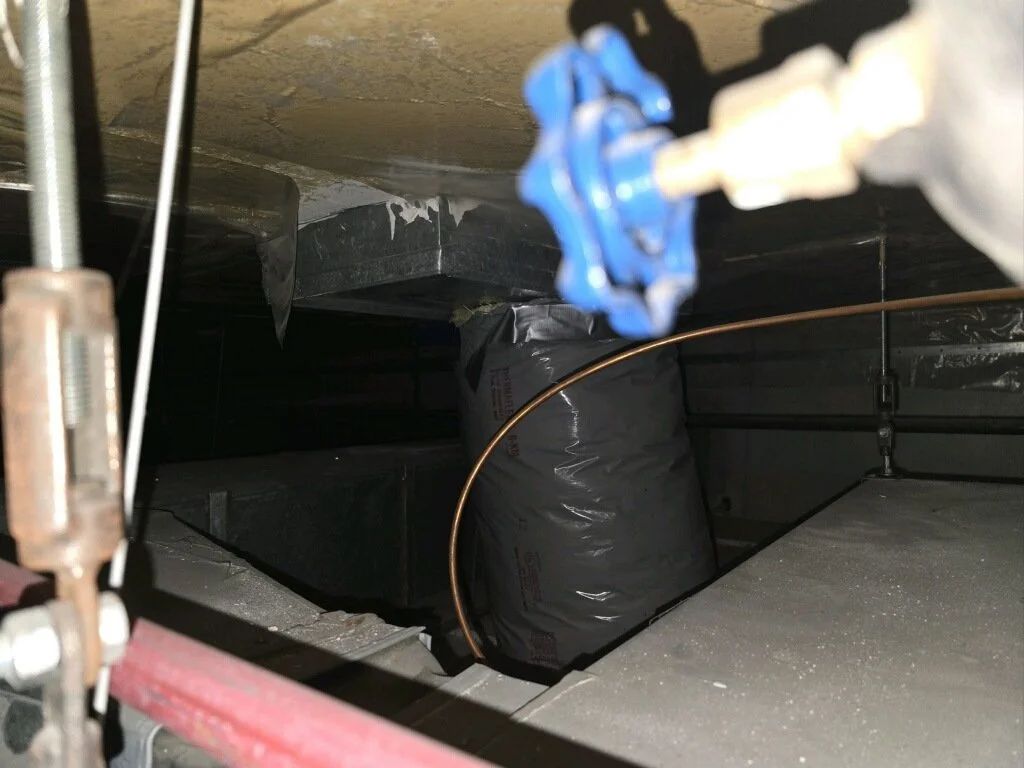
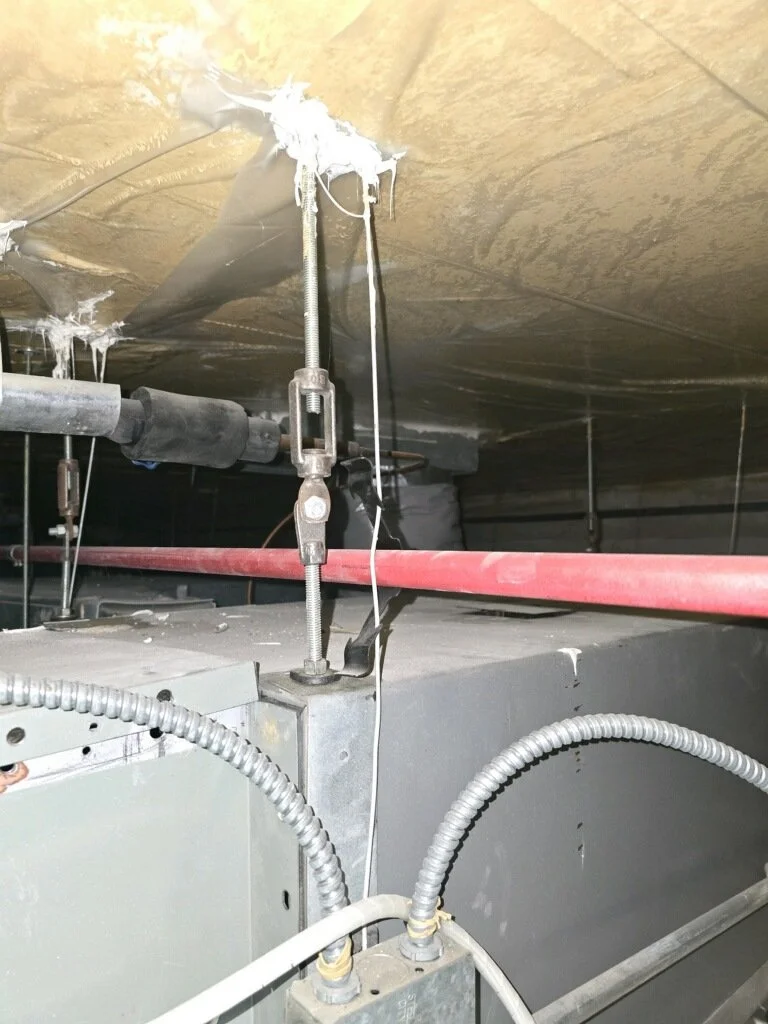
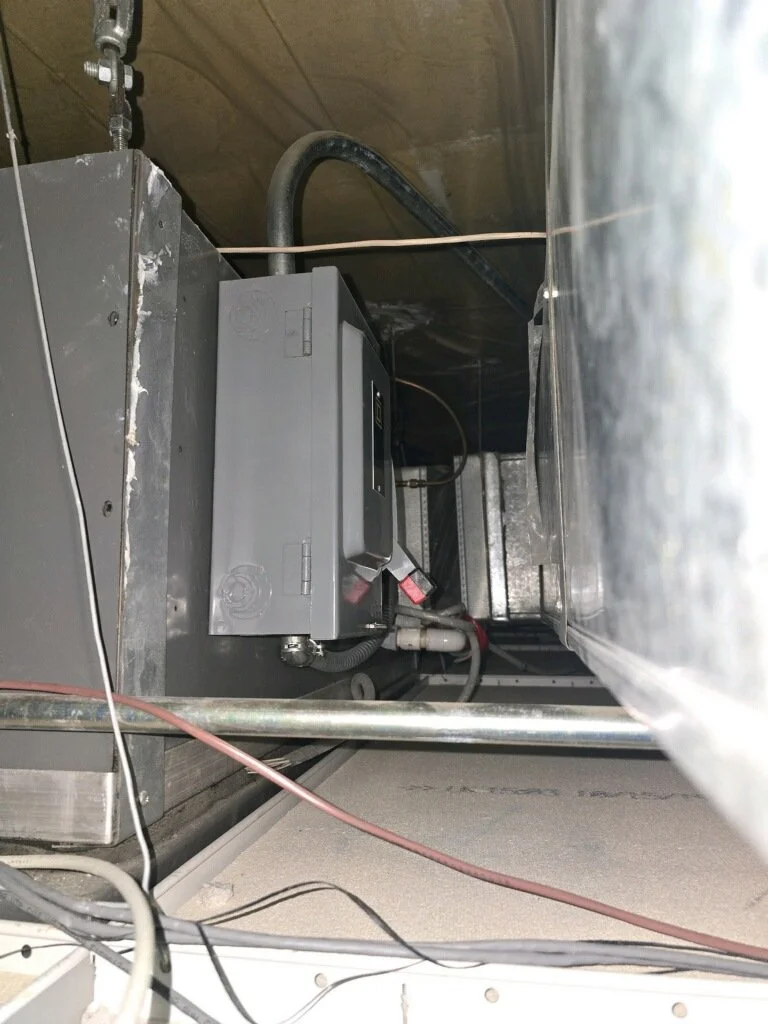
AACON served as Prime Contractor for the U.S. Air Force at Offutt Air Force Base, delivering the removal and replacement of two ceiling-mounted Liebert Mini-Mate CRAC units (ACU-4 and ACU-5) located in Building 457, Room 254. The new 1.5-ton, air-cooled, self-contained systems with electric reheat were installed to match existing load requirements and ensure uninterrupted climate control. Work included demolition of existing units, capping of abandoned humidification lines, installation of new electrical circuits and fused disconnects, condensate pumps, thermostats, and fabricated duct connections. Finishes and ceiling tiles were restored to original condition, and system commissioning was completed in coordination with government engineers.
Key work elements included simultaneous installation of both CRAC units during the cold-weather season to minimize downtime, custom electrical revisions to correct mislabeled panel conditions, and tight-sequence scheduling to complete demolition, installation, and commissioning within a compact timeframe. AACON’s field team successfully maintained operational temperature control throughout construction while adapting sequencing and coordination plans to meet stringent Air Force facility access and inspection protocols.
Early in construction, the team identified a discrepancy between the as-designed electrical panel labeling and actual field conditions, which posed a risk to system performance. Working closely with the Contracting Officer, AACON developed and implemented a corrective plan to install two new 208V circuits—captured under Modification P00002—without impacting the project schedule. Additionally, the occupied facility housed temperature-sensitive equipment that required continuous heating during winter months. To mitigate potential downtime, AACON revised its sequencing strategy to install both CRAC units concurrently, maintaining full environmental control and preventing operational disruption throughout the duration of work.
